If you run a plumbing, roofing, HVAC, electrical, landscaping, cleaning, painting, remodeling, handyman, pest control, tree service, or other home services business, your next customer may already be living in the neighborhood you serve.
The challenge is getting that homeowner to notice your business, trust your company, and contact you when they need help.
That is where Nextdoor marketing for home services businesses can be valuable.
Unlike broad social media platforms, Nextdoor is built around local communities. Homeowners use it to ask neighbors for recommendations, find local businesses, discuss home problems, and decide which service providers they can trust.
But Nextdoor marketing in 2026 is not simply about posting promotional messages everywhere.
The platform has changed.
Nextdoor now puts greater emphasis on authentic neighbor recommendations, Business Pages, Faves, local discovery, and business-to-community interactions. In August 2026, Nextdoor also clarified its self-promotion policy: businesses should promote through their Business Page rather than using personal neighbor accounts as advertising channels.
This guide explains how home service companies can build a practical Nextdoor marketing strategy in 2026—from setting up your Business Page to earning Faves, creating useful content, generating leads, using paid advertising, and measuring ROI.
What Is Nextdoor Marketing for Home Services Businesses?
Nextdoor marketing is the process of using Nextdoor’s business tools and local community environment to increase awareness, trust, recommendations, and customer opportunities for a local business.
For home service companies, this can include:
- Creating and optimizing a Nextdoor Business Page
- Collecting customer recommendations and Faves
- Publishing Business Posts
- Answering relevant homeowner questions appropriately
- Building local brand recognition
- Running Nextdoor Ads
- Using Local Deals where appropriate
- Exploring Opportunity Alerts
- Participating in neighborhood-focused marketing
- Tracking leads and conversions generated through Nextdoor
Nextdoor itself positions its platform as a marketing channel for local businesses and says 79% of neighbors were influenced by a recommendation seen on Nextdoor to visit a business or use a service.
For a home service company, that recommendation-driven environment matters because many service purchases are trust-based.
A homeowner may not know which plumber, roofer, electrician, or landscaper to call.
They may ask:
“Does anyone know a good plumber around here?”
The businesses that already have local visibility, positive recommendations, and a credible Business Page have an opportunity to enter that consideration set.
Why Nextdoor Can Work for Home Service Businesses
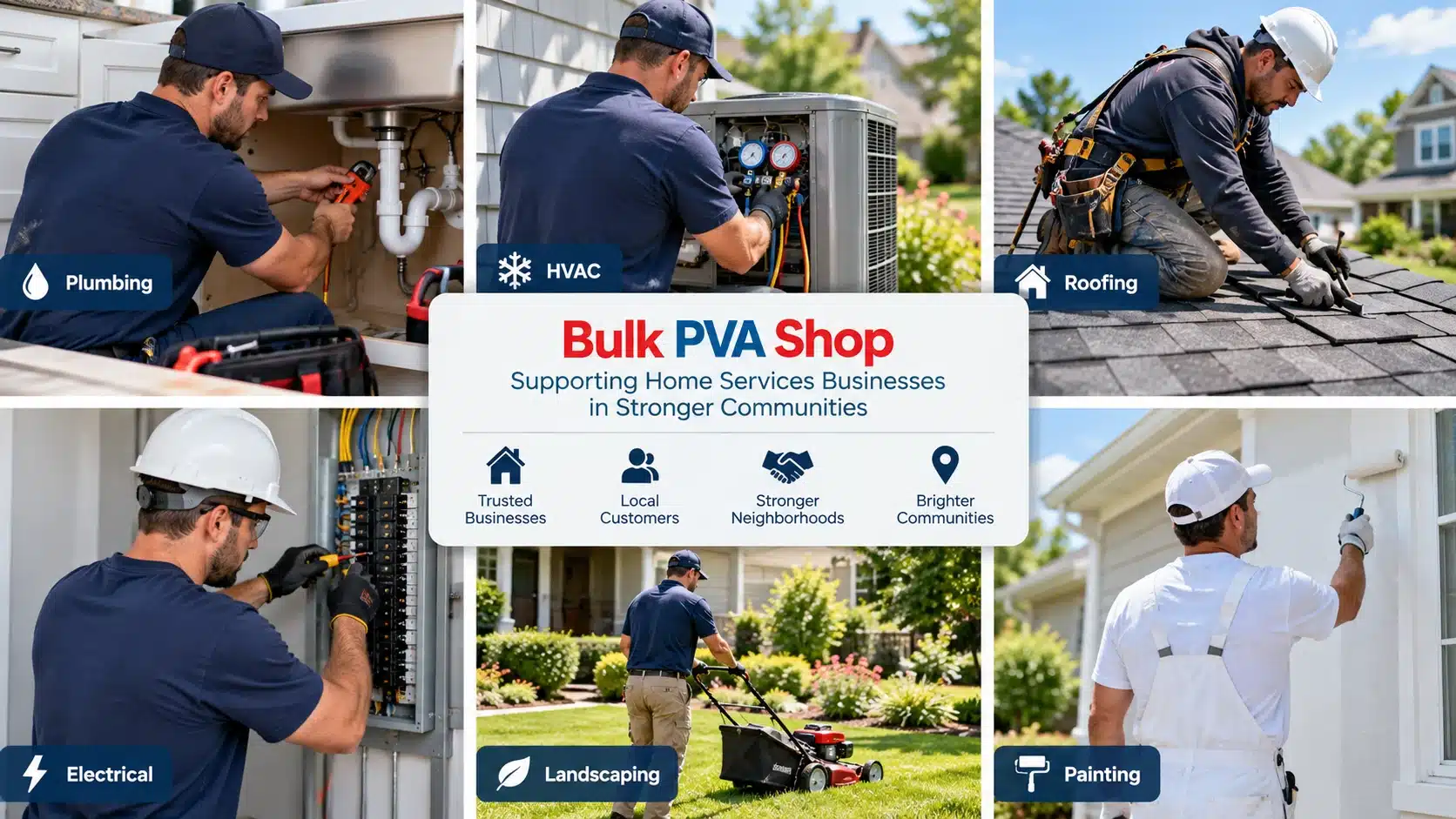
Home services have several characteristics that make local neighborhood marketing particularly relevant.
1. Your customers are geographically concentrated
A roofing company does not need customers across the entire country.
A plumber may only serve several ZIP codes.
A landscaper may concentrate on specific neighborhoods.
A house cleaner may have a practical service radius of 10–20 miles.
That makes a neighborhood-oriented platform potentially useful.
Nextdoor’s business tools are specifically designed around local businesses and nearby customers. Its Business Pages allow businesses to establish a local presence, while Business Posts can help businesses communicate with people in their surrounding communities.
2. Homeowners frequently need trusted recommendations
Hiring a home service provider involves risk.
A homeowner is giving someone access to their house, spending potentially hundreds or thousands of dollars, and trusting the provider to complete important work.
That makes social proof extremely important.
A recommendation from someone who lives nearby can be more persuasive than an anonymous advertisement.
3. Home problems often create urgent demand
Consider a homeowner who discovers:
- A leaking water heater
- A broken HVAC system
- A clogged drain
- A damaged roof
- Fallen branches
- A pest infestation
- A malfunctioning electrical outlet
- A broken fence
- An overgrown yard
They may not have been planning to hire anyone that morning.
The problem creates the demand.
This means your marketing needs to do more than promote your company. It needs to make your business easy to remember and easy to trust before the homeowner needs you.
Is Nextdoor Worth It for Home Service Businesses?
Yes—but not automatically.
Nextdoor can be worthwhile when your business depends heavily on local customers, reputation, referrals, and geographic proximity.
It is particularly relevant for businesses such as:
- Plumbers
- HVAC contractors
- Roofers
- Electricians
- Landscapers
- Lawn care companies
- House cleaners
- Painters
- Handymen
- Remodelers
- General contractors
- Pest control companies
- Tree service companies
- Pressure washing businesses
- Flooring contractors
- Fencing companies
- Garage door companies
- Pool service companies
- Window and gutter companies
However, Nextdoor should not necessarily replace Google, your website, referrals, Local Services Ads, or other lead channels.
A stronger approach is to treat Nextdoor as one part of your local customer acquisition system.
A simple way to think about it
Google: Captures existing search demand.
Nextdoor: Helps you become visible where local conversations, recommendations, and discovery happen.
Your website: Converts interested prospects and provides additional credibility.
Reviews/recommendations: Reduce perceived risk.
Email/SMS/CRM: Helps you follow up and retain customers.
The strongest strategy connects these channels instead of relying on one platform.
How Nextdoor Generates Leads for Home Service Businesses
A typical Nextdoor customer journey can look like this:
Homeowner sees your business → learns who you are → sees Faves/recommendations → encounters your useful content → remembers your company → has a home problem → searches or asks for a recommendation → discovers your Business Page → contacts you.
That means not every Nextdoor interaction produces an immediate lead.
Some interactions are about awareness.
Others build trust.
Others create direct opportunities.
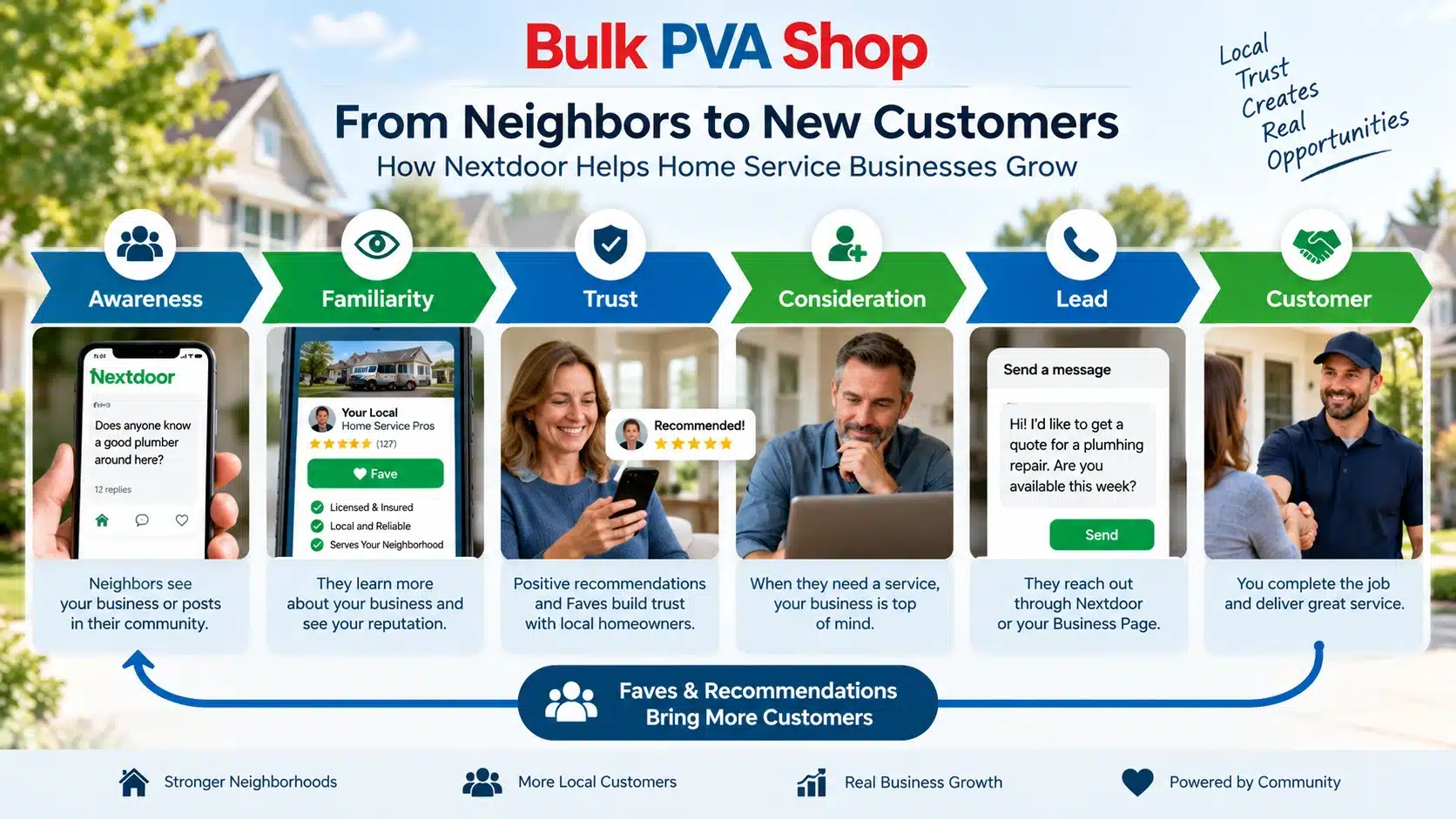
You can think of the funnel in six stages:
Stage 1: Awareness
The homeowner sees your business name.
Stage 2: Familiarity
They repeatedly see your business, content, recommendations, or local presence.
Stage 3: Trust
They see evidence that real customers have used and recommend your company.
Stage 4: Consideration
They compare your company with other local providers.
Stage 5: Lead
They call, message, visit your website, or request information.
Stage 6: Customer
They hire your company.
This is why measuring only immediate leads can underestimate the value of local reputation marketing.
What Changed on Nextdoor in 2026?
This is one of the most important sections for businesses following older Nextdoor marketing advice.
1. Personal-account self-promotion is no longer the strategy
In August 2026, Nextdoor clarified its self-promotion policy.
Businesses can promote themselves, but promotional activity should come through a Business Page, rather than using a personal neighbor account as a business advertising channel.
That means older advice such as:
“Create a personal profile and regularly advertise your company in neighborhood conversations.”
is not a strategy businesses should rely on in 2026.
Instead:
Use your personal account as a neighbor. Use your Business Page as your business.
You can still participate authentically in the community as a neighbor, but commercial promotion belongs in the appropriate business context.
2. Faves are becoming increasingly important
Nextdoor describes Faves as recommendations from verified neighbors who hired or chose a business.
Faves live on the Business Page and can help increase visibility, demonstrate earned reputation, and amplify word of mouth.
For home service businesses, this creates an important marketing loop:
Great service → happy customer → Fave/recommendation → stronger local reputation → more visibility → more potential customers.
This is fundamentally different from simply buying impressions.
3. Local Faves is changing business discovery
In September 2026, Nextdoor introduced Local Faves, a new discovery experience centered on businesses neighbors love and recommend.
That makes reputation increasingly important.
A home service business should therefore think beyond:
“How many people saw my post?”
and start thinking:
“What evidence does my Business Page give a homeowner that my company is worth contacting?”
Step 1: Create and Optimize Your Nextdoor Business Page
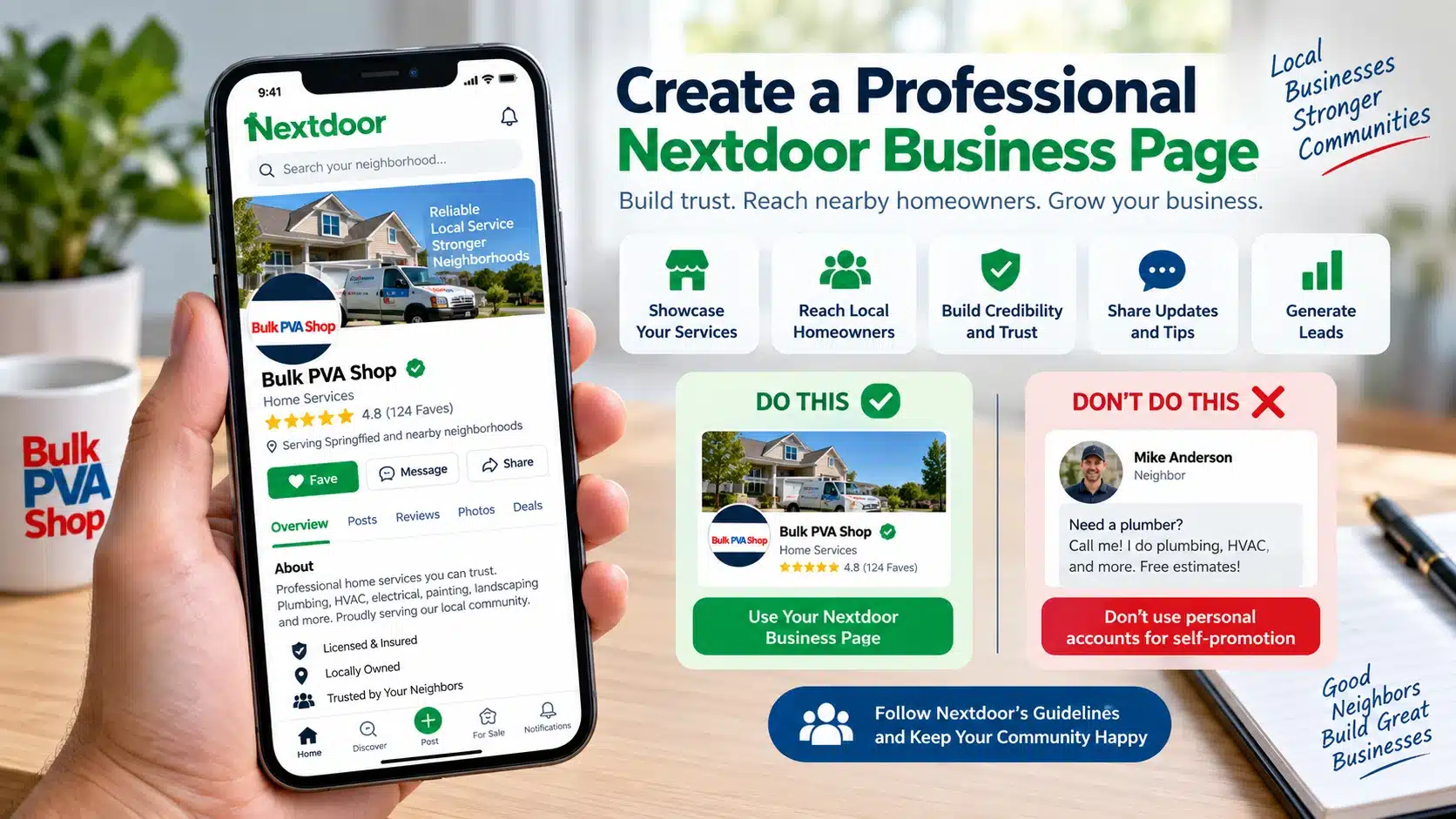
Your Business Page should be the foundation of your Nextdoor marketing strategy.
Nextdoor says local business owners, casual service providers, and home service providers can participate through Business Pages.
Make sure your profile includes accurate information such as:
- Business name
- Service category
- Phone number
- Website
- Service area
- Business description
- Hours
- Photos
- Logo
- Relevant services
- Customer recommendations
Your description should answer three questions
What do you do?
Where do you do it?
Why should a homeowner trust you?
For example:
Family-owned HVAC company serving homeowners throughout North Dallas. We specialize in AC repair, heating service, seasonal maintenance, and system replacement. Licensed technicians, transparent estimates, and same-day service available in select areas.
That is more useful than:
“Best HVAC company! Call us today!”
Your Business Page is not simply a profile.
It is a conversion asset.
Step 2: Build Your Faves and Recommendations
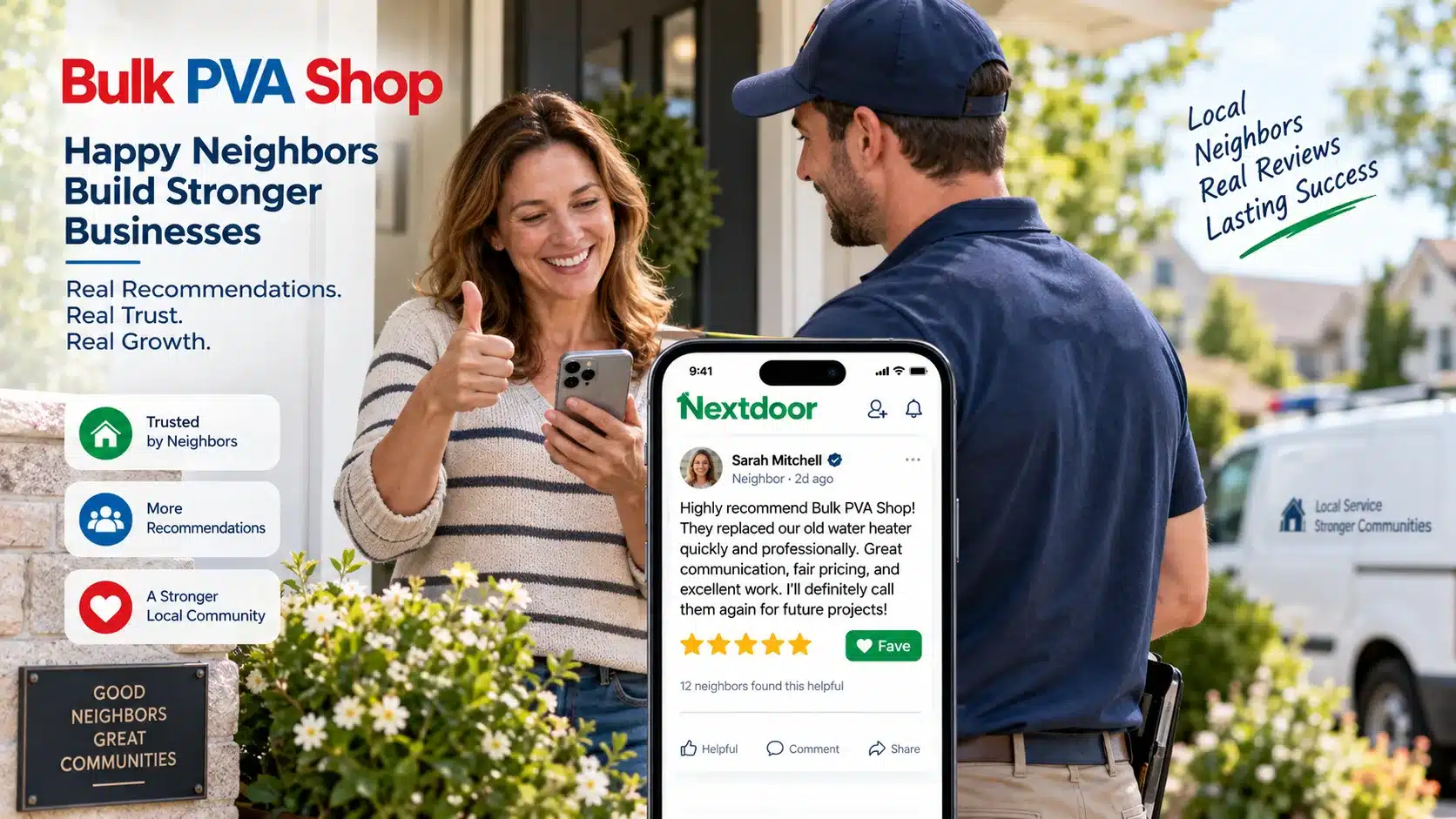
If Nextdoor is a word-of-mouth environment, reputation should be one of your biggest priorities.
Nextdoor says Faves come from verified neighbors who hired or chose the business and recommends that businesses ask their best customers to Fave them.
After completing a successful project, you can make the request part of your normal customer follow-up process.
For example:
Job completed → customer receives invoice → customer receives thank-you message → customer is invited to leave feedback/Fave → business follows up appropriately.
Do not manufacture recommendations.
Do not pressure customers.
Do not offer misleading incentives.
Focus on delivering an experience people naturally want to recommend.
What makes a strong recommendation?
A useful recommendation can communicate:
- What service was performed
- How quickly the company responded
- Whether the technician was professional
- Whether pricing was clear
- Whether the problem was solved
- Whether the customer would hire the company again
Specific experiences are generally more useful than generic praise.
Step 3: Publish Useful Business Posts
Business Posts are another important part of a Nextdoor strategy.
Nextdoor says businesses can use Business Posts to share updates, gather feedback, and generate customer leads.
But posting does not mean constantly saying:
“Call us!”
Instead, create content that is useful to homeowners.
Examples for a plumber
- “3 signs your water heater may be nearing the end of its life”
- “What to do before calling a plumber for a clogged drain”
- “Why your faucet may suddenly have low water pressure”
- “When a small leak becomes a serious plumbing problem”
Examples for an HVAC company
- “5 signs your AC needs attention before the next heat wave”
- “How often should you replace your HVAC filter?”
- “Why one room may be hotter than the rest of the house”
- “AC repair vs. replacement: what homeowners should consider”
Examples for a roofer
- “How to spot early signs of roof damage”
- “What homeowners should check after a major storm”
- “Three roof problems that should not be ignored”
- “How long should a typical asphalt shingle roof last?”
The goal is to become useful before you become promotional.
Step 4: Create Content Around Real Homeowner Problems
One of the best content strategies for home service companies is to work backward from problems.
Instead of asking:
“What can we advertise this week?”
Ask:
“What problems are homeowners in our service area likely to experience?”
Then create content around those problems.
For example:
Problem: Water pooling around the foundation.
Content: “4 reasons water may be collecting near your foundation.”
Problem: AC running constantly.
Content: “Why your AC may be running all day without cooling the house.”
Problem: Tree branches over the roof.
Content: “When an overhanging tree becomes a roof risk.”
Problem: Peeling exterior paint.
Content: “What peeling exterior paint can tell you about moisture.”
This approach naturally connects education with commercial intent.
Step 5: Avoid Looking Like Spam
One of the biggest mistakes businesses make on neighborhood platforms is treating them like digital billboards.
Posting the same offer repeatedly can make your business look less trustworthy.
Instead, aim for a content mix such as:
- Educational content
- Seasonal homeowner tips
- Before-and-after projects
- Local observations
- Team introductions
- Customer success stories
- Maintenance advice
- Safety reminders
- Community involvement
- Occasional offers
Your promotional content should support the overall relationship—not replace it.
And in 2026, businesses should be especially careful to keep promotional activity within the Business Page framework following Nextdoor’s updated self-promotion policy.
Step 6: Use Nextdoor Ads Strategically
Organic visibility is not the only option.
Nextdoor also offers paid advertising tools for local businesses.
Its advertising platform allows businesses to create campaigns, select goals, define audiences, establish budgets, and monitor campaign performance.
For a home service business, paid campaigns can be useful when you have a clear objective.
For example:
Lead-generation objective
Use advertising to introduce your company to homeowners within your service area.
Seasonal objective
Promote services that become more relevant at certain times of year.
Examples:
- AC maintenance before summer
- Furnace service before winter
- Storm-damage inspections
- Gutter cleaning before heavy rain
- Snow removal
- Tree trimming
- Lawn treatments
Promotional objective
Use a carefully structured offer to encourage homeowners to take action.
The important point is not to start with:
“How much should I spend?”
Start with:
“What customer action am I trying to generate?”
Then build the campaign around that objective.
Nextdoor Ads vs. Business Posts
These tools serve different purposes.
| Business Posts | Nextdoor Ads |
| Organic business communication | Paid promotion |
| Useful for ongoing visibility | Useful for controlled reach |
| Builds familiarity | Can accelerate exposure |
| No ad budget required | Requires advertising budget |
| Best for education/community | Best for specific campaigns |
| Supports reputation | Supports measurable campaigns |
A strong strategy can use both.
Business Posts build the foundation.
Ads amplify specific objectives.
Step 7: Explore Opportunity Alerts
Opportunity Alerts are another important development for home service providers.
The concept is straightforward: businesses can receive relevant opportunities from verified neighbors looking for local service providers.
For a home service company, this can be particularly valuable because the homeowner already has a problem and is looking for help.
Potentially relevant categories can include services such as:
- Handyman work
- Gardening
- Moving
- Auto repair
- Home maintenance
Availability, eligibility, pricing, and category coverage can change, so businesses should review the current Nextdoor offering before building their acquisition strategy around Opportunity Alerts.
Step 8: Build a Home-Service-Specific Nextdoor Strategy
Not every home service business should use the platform in exactly the same way.
Plumbers
Focus on:
- Emergency problems
- Maintenance education
- Water heater content
- Leak prevention
- Drain problems
- Local recommendations
HVAC Companies
Focus on:
- Seasonal maintenance
- Energy-efficiency education
- AC/furnace warning signs
- Before-and-after repairs
- Indoor comfort problems
Roofers
Focus on:
- Storm damage
- Roof inspections
- Maintenance
- Before-and-after projects
- Material education
- Warning signs
Landscapers
Focus on:
- Seasonal yard care
- Lawn transformations
- Landscaping inspiration
- Plant care
- Local weather considerations
- Before-and-after projects
Cleaning Companies
Focus on:
- Deep-cleaning tips
- Seasonal cleaning
- Move-in/move-out cleaning
- Before-and-after results
- Organization advice
Electricians
Focus on:
- Electrical safety
- Warning signs
- Lighting upgrades
- Panel education
- Home electrical maintenance
Handyman Businesses
Focus on:
- Small repairs
- Home maintenance checklists
- Seasonal projects
- Before-and-after work
- “Should I repair or replace?” content
The common principle is simple:
Make your expertise useful to the homeowner before asking the homeowner to hire you.
Nextdoor Marketing Funnel for Home Service Businesses
A practical funnel might look like this:
Top of funnel: Local awareness
- Business Page
- Useful posts
- Local presence
- Community participation
- Brand recognition
Middle of funnel: Trust
- Faves
- Recommendations
- Customer stories
- Before-and-after projects
- Helpful educational content
Bottom of funnel: Conversion
- Business Page contact information
- Direct messages
- Website visits
- Calls
- Ads
- Local Deals
- Opportunity Alerts
Post-sale: Advocacy
- Excellent service
- Customer follow-up
- Fave request
- Recommendation
- Repeat business
- Referrals
The final stage is especially important.
A customer should not be viewed as the end of the funnel.
A happy customer can become the source of your next customer.
How Much Does Nextdoor Marketing Cost?
One of the advantages of starting with Nextdoor is that businesses can establish a Business Page without starting with an advertising budget. Nextdoor currently promotes its Business Page as a free way for local businesses to establish an online presence.
Paid options are separate.
Your potential costs can include:
- Advertising
- Local Deals
- Sponsorship products
- Optional business subscriptions or paid tools
- Your internal time and labor
The correct budget depends on your market, service area, average customer value, competition, and campaign objective.
Do not choose a budget simply because another contractor says they spend a certain amount.
Instead, work backward from economics.
For example:
Average customer value: $1,500
Gross profit contribution: $600
Target acquisition cost: $150
Then your marketing campaign needs to generate customers at an acquisition cost that makes sense for your margins.
How to Measure Nextdoor Marketing ROI
Do not judge your campaign only by likes or views.
Track actions that connect to revenue.
Useful metrics include:
- Business Page views
- Faves
- Recommendations
- Post engagement
- Website clicks
- Phone calls
- Messages
- Quote requests
- Leads
- Appointments
- Jobs won
- Revenue
- Cost per lead
- Cost per booked job
- Customer acquisition cost
A simple calculation is:
Customer Acquisition Cost = Total Nextdoor Marketing Cost ÷ New Customers Acquired
For example:
If you spend $600 and acquire 6 customers:
$600 ÷ 6 = $100 customer acquisition cost
Then compare that against the profit you typically generate from those customers.
Why Your Nextdoor Marketing May Not Be Generating Leads
If your Nextdoor presence gets views but no customers, the problem may not be the platform.
Check these areas.
Problem 1: Your Business Page is incomplete
Fix:
- Add service information
- Add photos
- Add contact details
- Clarify service areas
- Build recommendations
Problem 2: Your content is too promotional
Fix:
Create more homeowner-focused educational content.
Problem 3: You have little social proof
Fix:
Build legitimate customer recommendations and Faves through excellent service and appropriate customer requests.
Problem 4: Your service area is too broad
Fix:
Focus your messaging and advertising on areas you can actually serve profitably.
Problem 5: Your offer is unclear
Fix:
Tell homeowners exactly what problem you solve and what action they should take.
Problem 6: Your response time is slow
A lead that waits several hours—or days—for a response may contact another provider.
Problem 7: You are measuring the wrong thing
A post may not generate an immediate call but could contribute to future brand recognition and a later recommendation-driven customer.
Nextdoor vs. Google for Home Services
These channels play different roles.
A homeowner searches:
“emergency plumber near me”
They already have intent.
Nextdoor
A homeowner may ask:
“Who do you recommend for a plumber?”
or discover a business while browsing local conversations and recommendations.
Google is often strongest for capturing active demand.
Nextdoor can be valuable for local discovery, trust, recommendations, and staying top-of-mind.
The smartest home service companies do not necessarily choose one.
They build a system where both can contribute.
Nextdoor vs. Facebook
Facebook has broader social functionality and a much wider content ecosystem.
Nextdoor is more explicitly neighborhood-centered.
For a local home service company, that difference matters.
Your Facebook strategy might focus on:
- Brand content
- Videos
- Community pages
- Retargeting
- Social engagement
Your Nextdoor strategy can focus more heavily on:
- Local recommendations
- Neighborhood discovery
- Homeowner questions
- Local reputation
- Business Page visibility
- Faves
A 30-Day Nextdoor Marketing Plan for Home Service Businesses
You do not need to build everything in one day.
Week 1: Build the foundation
- Claim your Business Page
- Verify your business
- Complete your profile
- Add logo and photos
- Add services
- Define service areas
- Add website and contact information
- Review existing recommendations
Week 2: Start building authority
Publish useful content around:
- Common homeowner problems
- Seasonal maintenance
- Frequently asked questions
- Before-and-after projects
- Common mistakes
Focus on being helpful rather than promotional.
Week 3: Strengthen reputation
- Follow up with recent happy customers
- Encourage legitimate feedback/Faves
- Highlight successful projects
- Improve your Business Page based on customer questions
- Identify your strongest service categories
Week 4: Test acquisition
Consider:
- A targeted ad campaign
- A relevant Local Deal
- Opportunity Alerts, if available and appropriate
- A stronger conversion offer
- Tracking calls and leads
At the end of the month, review the numbers.
Do not ask only:
“Did I get leads?”
Ask:
- What content generated the most engagement?
- Did Business Page views increase?
- Did Faves increase?
- Which services attracted attention?
- Which neighborhoods responded?
- How many real inquiries came from Nextdoor?
- How many became customers?
- What did each customer cost to acquire?
Then improve the next 30 days.
10 Nextdoor Marketing Mistakes Home Service Businesses Should Avoid
1. Using a personal account as your business advertising channel
Use the Business Page for commercial promotion under Nextdoor’s current policy.
2. Posting only advertisements
Teach and help homeowners.
3. Ignoring recommendations
Social proof is a major part of local service marketing.
4. Buying into unrealistic lead promises
No platform can guarantee a particular number of customers.
5. Targeting areas you cannot serve
Local marketing works best when your operational service area matches your marketing area.
6. Responding slowly
Local prospects may contact multiple providers.
7. Having a weak Business Page
Your profile needs to answer the homeowner’s basic questions quickly.
8. Ignoring seasonal demand
Home services are heavily influenced by weather and seasonal maintenance.
9. Measuring vanity metrics only
Views and likes are not the same as revenue.
10. Depending on one lead source
Build a diversified local acquisition system.
The Best Nextdoor Strategy for Home Service Businesses in 2026
If you want the short version, it is this:
1. Build a complete Business Page.
Make it easy for homeowners to understand what you do and where you work.
2. Build legitimate Faves and recommendations.
Your reputation is one of your strongest assets.
3. Publish genuinely useful homeowner content.
Solve small problems before asking for the sale.
4. Stay local.
Talk about the neighborhoods, weather, homes, and problems relevant to your actual service area.
5. Use Business Posts consistently.
Build familiarity over time.
6. Use paid advertising selectively.
Promote specific services and campaigns rather than blindly buying exposure.
7. Explore Opportunity Alerts.
When available and relevant, they can connect service businesses with homeowners who have active needs.
8. Track actual business outcomes.
Calls, messages, estimates, booked jobs, revenue, and acquisition cost matter more than impressions alone.
9. Turn customers into advocates.
Great service can create the recommendations that drive your next customers.
10. Keep your strategy current.
Nextdoor is changing, and strategies written several years ago may no longer reflect the platform’s current policies and products.
Frequently Asked Questions
Is Nextdoor good for home service businesses?
It can be, particularly for businesses that depend on local homeowners, recommendations, reputation, and geographic proximity. Results vary by market and service category, so it should be evaluated alongside other acquisition channels.
Is Nextdoor free for businesses?
A Business Page can be created without starting with an advertising budget. Paid advertising and other products are separate.
Can contractors advertise on Nextdoor?
Yes. Nextdoor specifically supports local businesses and home service providers. Commercial promotion should be conducted through the appropriate Business Page rather than using a personal neighbor account as an advertising channel.
How do I get more leads from Nextdoor?
Start with a complete Business Page, build legitimate Faves and recommendations, publish useful local content, respond quickly to inquiries, and test paid campaigns or other available business tools when appropriate.
How do I get more Faves on Nextdoor?
Provide excellent service and appropriately ask satisfied customers to Fave your business. Nextdoor currently provides businesses with a Fave link that can be shared with customers.
Should I use my personal Nextdoor account to promote my company?
Do not use your personal account as your business advertising channel. Nextdoor’s 2026 policy directs business promotion to Business Pages.
Are Nextdoor Ads worth it?
They can be worth testing when you have a clear objective, defined service area, compelling offer, and a way to measure leads and customers. Do not judge advertising solely by impressions.
What should a plumber post on Nextdoor?
Useful topics include leak prevention, water heater maintenance, clogged drains, low water pressure, emergency preparation, and signs that a plumbing issue needs professional attention.
What should a roofer post on Nextdoor?
Roof inspection tips, storm-damage information, maintenance advice, warning signs, before-and-after projects, and explanations of common roofing problems are good starting points.
How often should a home service business post?
There is no universal ideal frequency. Prioritize useful, relevant content over posting simply to hit a quota. Consistency matters, but quality and relevance matter more.
Final Takeaway
Nextdoor marketing for home services is not simply about putting your company in front of local homeowners.
It is about becoming a recognizable, trusted local service provider before the homeowner needs you.
The strongest 2026 strategy combines:
Business Page + Faves + Recommendations + Useful Content + Local Relevance + Paid Promotion + Fast Response + Measurement.
And the foundation is trust.
A homeowner with a leaking pipe, broken AC, damaged roof, overgrown yard, or other urgent problem does not necessarily want the company with the loudest advertisement.
They want a company they believe will do the job correctly.
That is why local reputation matters.
And that is where Nextdoor can become more than another advertising channel—it can become part of your local word-of-mouth engine.